Anthropic: We Stopped Building Agents, Started Skills
Anthropic explains why skills - organized folders with procedural knowledge - are the missing layer in the agent stack, and how they work with MCP.
Why Anthropic Shifted From Agents to Skills
This is Anthropic (Barry and Mahes) presenting the architecture they've converged on after building Claude Code - and the insight reshapes how you think about AI agents. The key realization: "Code is not just a use case but the universal interface to the digital world."
"Who do you want doing your taxes?" The 300 IQ mathematical genius who figures out tax code from first principles, or the experienced tax professional with domain expertise? You pick the expert every time. "Agents today are brilliant, but they lack expertise. They can do amazing things when you really put in the effort and give proper guidance, but they're often missing important context upfront."
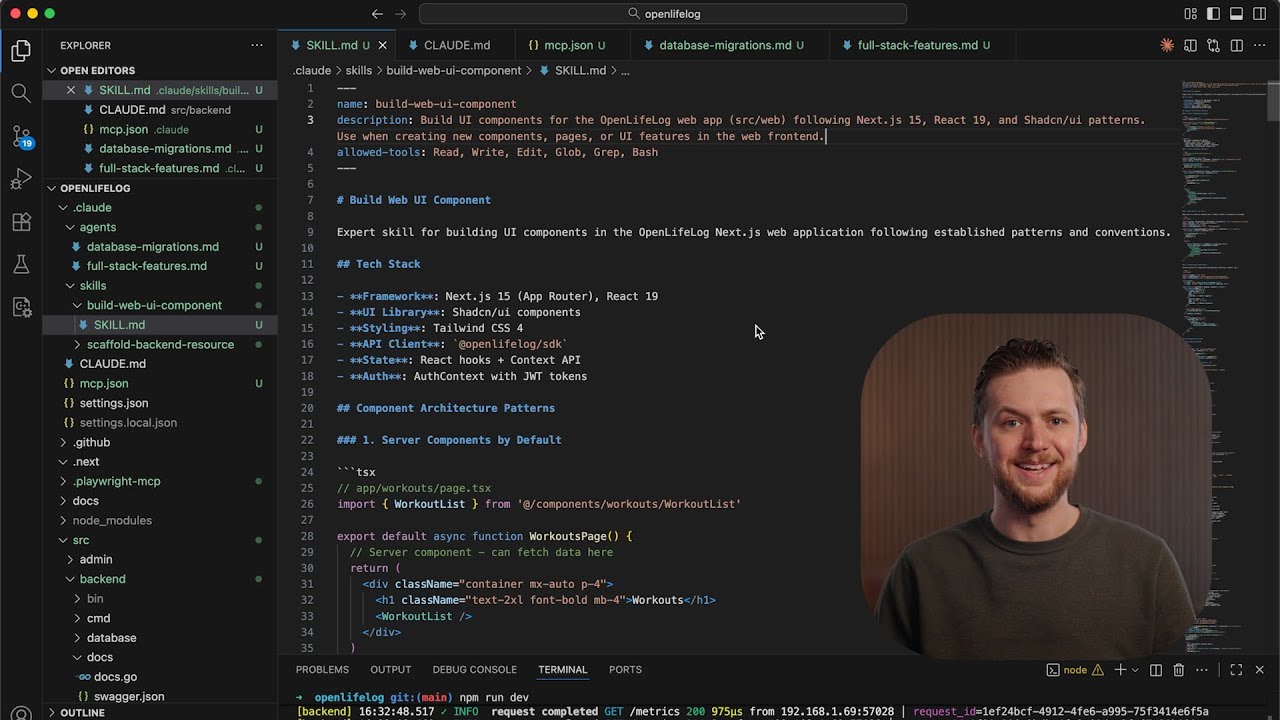
Skills are just folders. Deliberately simple: "organized collections of files that package composable procedural knowledge." Version them in Git, throw them in Google Drive, zip them up and share. Why reinvent primitives we've used for decades? But crucially, skills can include scripts as tools - code that's self-documenting, modifiable, and lives in the file system until needed.
Progressive disclosure protects context. Only metadata is shown to the model ("you have this skill"). When the agent needs the skill, it reads skill.md for core instructions. This means you can give an agent hundreds or thousands of skills without drowning the context window.
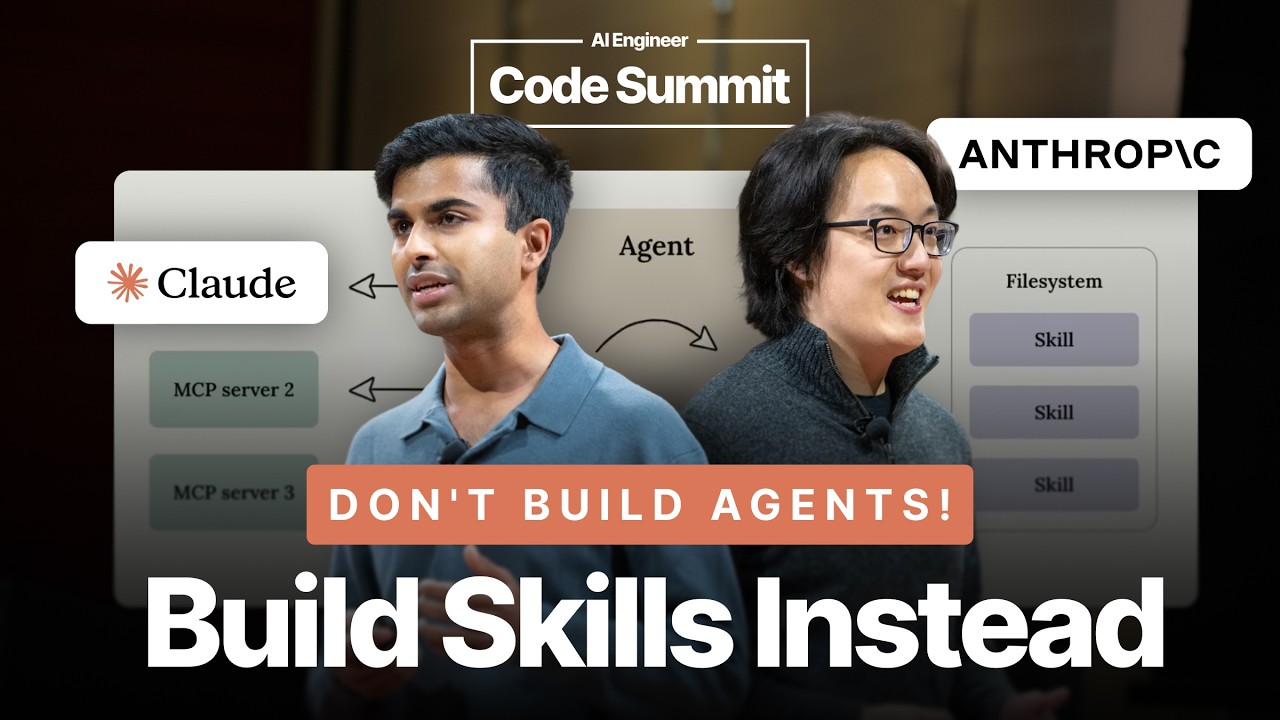
The emerging architecture is converging. Agent loop + runtime environment (file system + code) + MCP servers (tools and data from outside world) + skill library (pulled into context only at runtime for specific tasks). "MCP provides the connection to the outside world while skills provide the expertise."
Non-technical users are building skills. Finance, recruiting, accounting, legal - people who aren't developers are extending general agents for their day-to-day work. This validates the core bet: skills make agents more accessible beyond coding use cases.
The analogy: models = processors, agent runtime = OS, skills = applications. A few companies build processors and operating systems. Millions of developers build applications that encode domain expertise and unique points of view. Skills open up this layer for everyone - "just by putting stuff in a folder."
11 Insights From Anthropic on Skills Architecture
- Skills = organized folders - Package procedural knowledge with scripts as tools; version in Git, share via Drive
- "Code is all we need" - Claude Code is actually a general purpose agent; code is the universal interface
- Progressive disclosure - Only metadata shown; skills loaded at runtime; fits hundreds of skills in context
- MCP + Skills architecture - MCP provides connectivity, skills provide expertise
- Enterprise adoption - Fortune 100s teaching agents about organizational best practices and internal tools
- Non-technical builders - Finance, legal, accounting creating skills without coding
- Skill creator skill - Claude can already create skills for itself today
- Continuous learning - "Anything Claude writes down can be used by a future version of itself"
- 5 weeks, thousands of skills - Ecosystem growing fast since launch
- Foundational/third-party/enterprise - Three types: general capabilities, partner integrations, org-specific
- Day 30 > Day 1 - Goal is Claude gets significantly better as you work with it over time
What This Means for the AI Developer Ecosystem
Skills are to AI agents what apps were to smartphones - the layer where millions of people encode domain expertise into software. The breakthrough isn't technical complexity; it's radical simplicity. Anyone who can organize files in a folder can now extend AI capabilities.